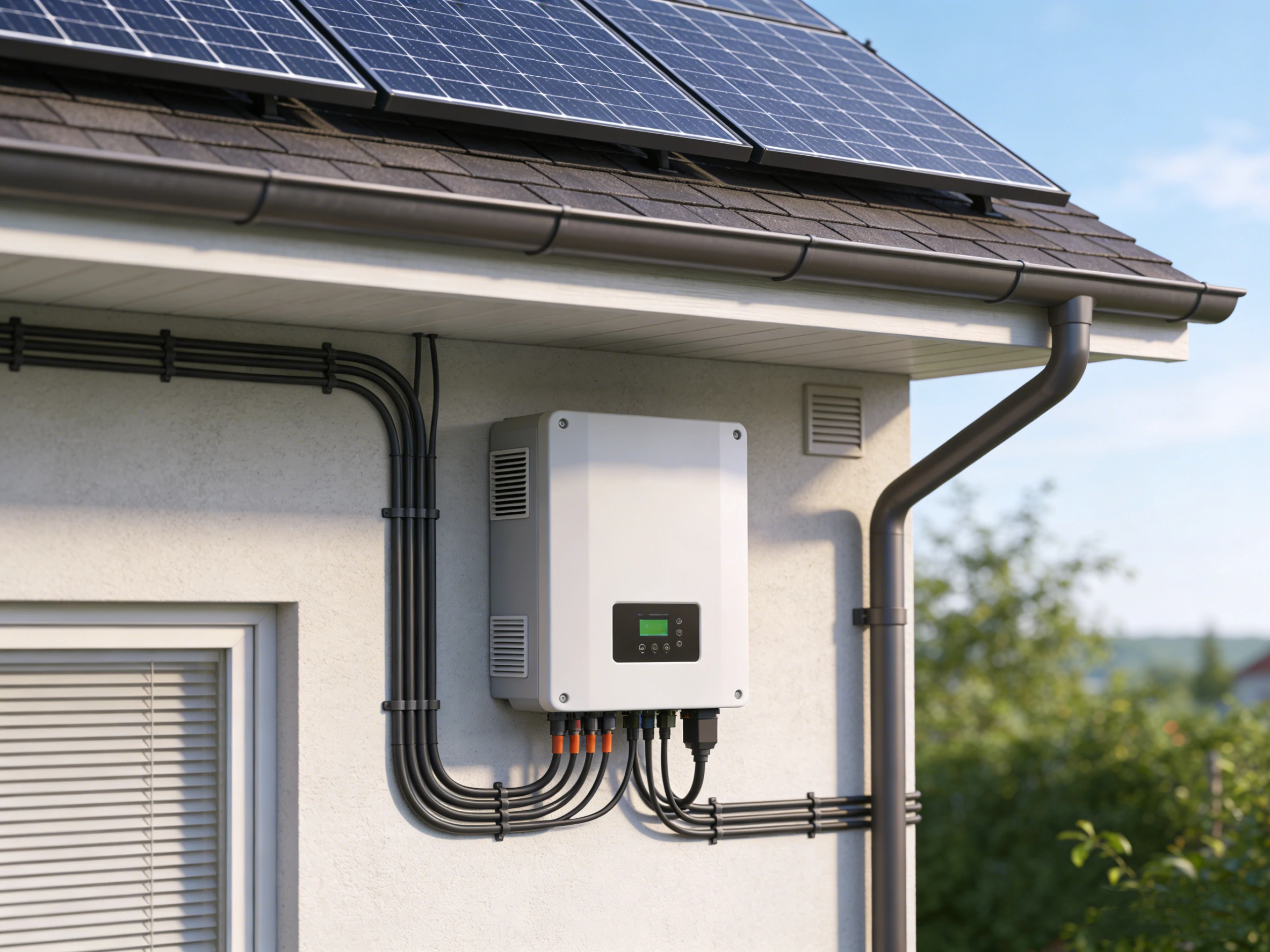
A solar panel produces electricity, but the electricity it generates is not usually ready to power the appliances in your home. This is where a solar inverter becomes essential. It converts the electricity produced by solar panels into a form that household appliances and the electrical grid can use.
Choosing an inverter is not simply a matter of picking the cheapest model with the highest advertised capacity. The right choice depends on your solar panel array, battery setup, electricity usage, grid connection, available space, and the type of backup you expect during power outages.
This guide explains what a solar inverter does, the different types available, their advantages and limitations, and the factors you should consider before buying one.
What Is a Solar Inverter?
A solar inverter is an electrical device that converts direct current (DC) electricity from solar panels into alternating current (AC) electricity used by most household appliances.
Solar panels generate DC electricity when sunlight reaches their photovoltaic cells. Homes, businesses, and electrical grids generally operate using AC power. The inverter performs the conversion between these two forms of electricity.
Modern inverters can do much more than simple DC-to-AC conversion. Depending on the model, an inverter may also monitor solar production, manage batteries, provide protection against electrical problems, communicate with monitoring apps, and coordinate electricity flowing between solar panels, batteries, appliances, and the grid.
That makes the inverter one of the most important components in a solar power system.
Why Does a Solar Inverter Matter?
Solar panels get much of the attention in a solar installation, but the inverter has a major effect on how the entire system operates.
A good inverter needs to work efficiently with the solar array while handling the electrical demands of the property. It also needs to be compatible with the system’s voltage, current, battery technology, and intended operating mode.
For example, a grid-connected solar system may use an inverter designed primarily to synchronize with the utility supply. A home that needs backup power during outages may require a hybrid inverter capable of managing batteries and backup loads.
The difference matters because solar production and backup power are not necessarily the same thing. A grid-tied system can produce plenty of solar electricity but still shut down during a grid outage unless it has appropriate backup equipment and configuration.
How Does a Solar Inverter Work?
The basic process is easier to understand in four steps:
- Solar panels generate DC electricity.
- The inverter receives the DC electricity.
- Power electronics convert DC into AC electricity.
- The AC electricity is supplied to appliances, batteries, or the grid depending on the system design.
The inverter continuously manages electrical conditions while performing this conversion.
Many modern systems also use maximum power point tracking (MPPT). MPPT helps the system operate the solar panels at an electrical point where they can produce useful power under changing sunlight conditions.
Clouds, temperature, shading, and the orientation of the panels can all affect solar output. The inverter therefore has to respond to changing conditions rather than simply performing one fixed conversion.
Types of Solar Inverters
There is no single inverter type that is best for every property. The main categories have different purposes.
1. String Inverter
A string inverter connects a group, or “string,” of solar panels to a central inverter.
This is a common arrangement for residential and commercial installations because it can be relatively straightforward and cost-effective.
Advantages include:
- Simple system design
- Generally easier maintenance
- Suitable for many conventional rooftop installations
- Can provide good overall efficiency when panels receive similar sunlight
The main limitation is that panels connected to the same string can be affected when one or more panels experience significant shading or performance differences.
For example, if part of a roof is shaded by a nearby structure for several hours each day, the installer needs to consider whether a traditional string configuration is appropriate.
2. Microinverter
A microinverter is installed at or near individual solar panels rather than using one central inverter for the entire array.
This arrangement allows each panel to operate more independently.
Microinverters can be particularly useful on roofs with multiple orientations, partial shading, or complicated layouts. They can also make panel-level monitoring possible on compatible systems.
The trade-off is that having an inverter associated with each panel can increase equipment and installation complexity.
3. Hybrid Inverter
A hybrid inverter is designed to work with both solar panels and batteries.
It can manage energy flowing between the solar array, household loads, battery storage, and, depending on the system, the electrical grid.
This makes hybrid systems attractive for homeowners who want solar power while also using batteries for energy storage or backup.
However, simply buying a hybrid inverter does not automatically guarantee whole-home backup. The system still needs appropriate battery capacity, wiring, protection equipment, and backup-load configuration.
4. Off-Grid Inverter
An off-grid inverter is designed for systems that operate independently of the utility grid.
These systems typically combine solar panels with batteries because electricity needs to remain available when solar production is low or unavailable.
Off-grid installations require careful sizing. The system needs to account not only for average daily energy consumption but also for peak loads and periods when sunlight is limited.
Solar Inverter vs. Hybrid Inverter
The terms can sometimes cause confusion.
A conventional grid-tied solar inverter is mainly designed to convert solar electricity and interact with the utility grid. A hybrid inverter adds battery-management capabilities and can be part of a backup system.
If your primary goal is reducing electricity purchased from the grid, a standard grid-connected setup may be appropriate.
If your goal includes solar plus battery storage and backup during outages, a hybrid system may make more sense.
The best choice depends on how you actually use electricity rather than simply which inverter has more features.
Key Benefits of a Solar Inverter
Converts Solar Electricity Into Usable Power
The most basic function is also the most important. The inverter converts the DC output of solar panels into AC electricity that household equipment can use.
Helps Optimize Solar Production
Modern inverters with MPPT can continuously adjust operating conditions to help extract useful energy from the solar array as sunlight changes.
Enables System Monitoring
Many newer inverters provide monitoring through a display, web portal, or smartphone application. Depending on the manufacturer and model, users may be able to view solar generation, energy consumption, battery status, and system warnings.
Supports Battery Storage
Compatible hybrid and battery-capable inverters can control charging and discharging, allowing stored solar energy to be used later.
Provides Electrical Protection
Inverters commonly include protective functions designed to respond to abnormal electrical conditions. The exact protection features vary between models, so they should be checked in the manufacturer’s specifications.
How to Choose the Right Solar Inverter
Buying based only on the inverter’s advertised wattage can lead to problems. Consider the entire system.
1. Calculate Your Solar Array Size
Start with the total capacity of your planned solar panels.
An inverter needs to be compatible with the panel array’s electrical characteristics, including voltage and current limits. The relationship between panel capacity and inverter capacity should be designed according to the equipment specifications and local installation requirements.
2. Consider Your Electricity Usage
Look at what you actually run in your home.
Large loads such as air conditioners, pumps, refrigerators, electric heaters, and other motors can have significant starting or operating requirements.
An inverter that seems large enough based on average consumption may still be unsuitable if several high-power appliances operate simultaneously.
3. Decide Whether You Need Battery Backup
Ask yourself what you want the solar system to accomplish.
If your goal is primarily daytime solar generation and grid interaction, battery storage may not be necessary.
If you frequently experience power outages and want electricity available after sunset or during an outage, battery storage becomes much more relevant.
4. Check Compatibility
Before purchasing, verify compatibility between:
- Solar panel voltage and current
- Inverter input limits
- Battery voltage and chemistry
- Maximum charging and discharging power
- Grid requirements
- Backup output specifications
- Communication protocols
A professional installer should verify these values rather than relying on brand names alone.
5. Look at Efficiency
Inverter efficiency affects how much of the available solar energy becomes usable electrical energy.
However, don’t choose solely on the highest efficiency number in a brochure. Real-world performance also depends on system design, operating conditions, temperature, shading, and loading.
6. Think About the Installation Environment
Temperature can affect inverter performance and operating limits.
An inverter installed in a poorly ventilated, extremely hot location may face more challenging conditions than one installed in an appropriate shaded and ventilated area.
Always follow the manufacturer’s installation requirements.
Common Solar Inverter Mistakes
Buying an Inverter Without Checking the Panels
Two systems with the same nominal wattage can have different voltage and current characteristics.
The inverter must be compatible with the actual electrical characteristics of the panel array.
Ignoring Peak Loads
A household might use relatively little electricity most of the day but suddenly operate several large appliances at once.
Sizing should therefore consider peak demand, not just average consumption.
Assuming Solar Automatically Works During a Power Outage
This is one of the most common misconceptions.
Many grid-connected solar systems are designed to shut down when the utility grid fails. This is related to safety requirements that prevent systems from sending electricity onto a de-energized grid.
If backup power is required, the system needs equipment and configuration specifically designed for that purpose.
Choosing Only by Price
A cheaper inverter may look attractive initially, but purchase price is only one part of the decision.
Consider warranty terms, technical support, compatibility, monitoring features, installation requirements, and long-term reliability.
Installing the Inverter in an Unsuitable Location
Heat, moisture, dust, and inadequate ventilation can create problems.
The manufacturer’s environmental and installation requirements should always take priority.
Solar Inverter Maintenance
Most modern inverters do not require constant hands-on maintenance, but they should not simply be forgotten after installation.
Keep the area around the inverter clear and make sure ventilation openings are not blocked.
Regularly check the system monitoring interface for unusual warnings or sudden changes in production.
If the system shows repeated faults, unusual noises, burning smells, damaged cables, or visible physical damage, stop using the equipment if it is safe to do so and contact a qualified technician.
Electrical solar equipment can contain dangerous voltages even when the system appears inactive.
Expert Tips for Getting Better Results
Size the system around your real usage. Don’t base the design entirely on the number of panels you can fit on the roof.
Plan for the future. If you expect to add batteries or additional solar capacity later, check whether the inverter can accommodate the planned expansion.
Understand your backup requirements. Decide whether you need to keep only essential circuits running or want backup power for most of the property.
Check the warranty carefully. Look at the warranty period, conditions, service arrangements, and what happens if the inverter develops a fault.
Use qualified installation help. Correct wiring, protection, grounding, configuration, and commissioning are just as important as choosing the equipment.
Don’t ignore local conditions. High temperatures, dust, grid instability, and frequent outages can influence the most suitable system design.
Frequently Asked Questions
What does a solar inverter do?
A solar inverter converts DC electricity generated by solar panels into AC electricity that can be used by household appliances and, where permitted and configured, supplied to the electrical grid.
How long does a solar inverter last?
The service life varies by model, installation conditions, operating environment, and maintenance. Always check the manufacturer’s warranty and published specifications rather than assuming a fixed lifespan.
Can a solar inverter work without batteries?
Yes. Many grid-connected solar systems operate without batteries. Solar electricity can be used during production, with excess energy handled according to the system and local grid arrangement.
Does a solar inverter provide power during an outage?
Not necessarily. Many grid-tied systems shut down when the grid goes down. Backup operation requires an appropriately designed inverter and supporting equipment, usually including battery storage or another approved backup source.
Is a hybrid inverter better than a normal inverter?
Not automatically. A hybrid inverter can be a better fit if you want battery storage and backup capabilities. If you only want a straightforward grid-connected solar system, a conventional inverter may be sufficient.
How do I know what size solar inverter I need?
The correct size depends on your solar array, electricity demand, electrical characteristics, battery requirements, and system design. A qualified installer should check the panel and inverter specifications rather than selecting the capacity based only on household appliance wattage.
Can shading affect a solar inverter?
Shading primarily reduces the energy available from affected solar panels. The impact on the overall system depends on the panel layout and inverter architecture. Microinverters or other module-level power electronics can sometimes offer advantages on roofs with significant partial shading.
Final Thoughts
A solar inverter is much more than a box that changes DC electricity into AC power. It plays a central role in how a solar energy system produces, manages, monitors, and sometimes stores electricity.
The right choice depends on the complete system: solar panels, household loads, batteries, grid connection, installation environment, and backup requirements. A low-cost inverter may not be the best value if it lacks the features or compatibility your system needs.
Before buying, compare the electrical specifications, warranty, monitoring options, battery compatibility, installation requirements, and expected loads. A properly matched inverter can help the rest of your solar system operate effectively for years.