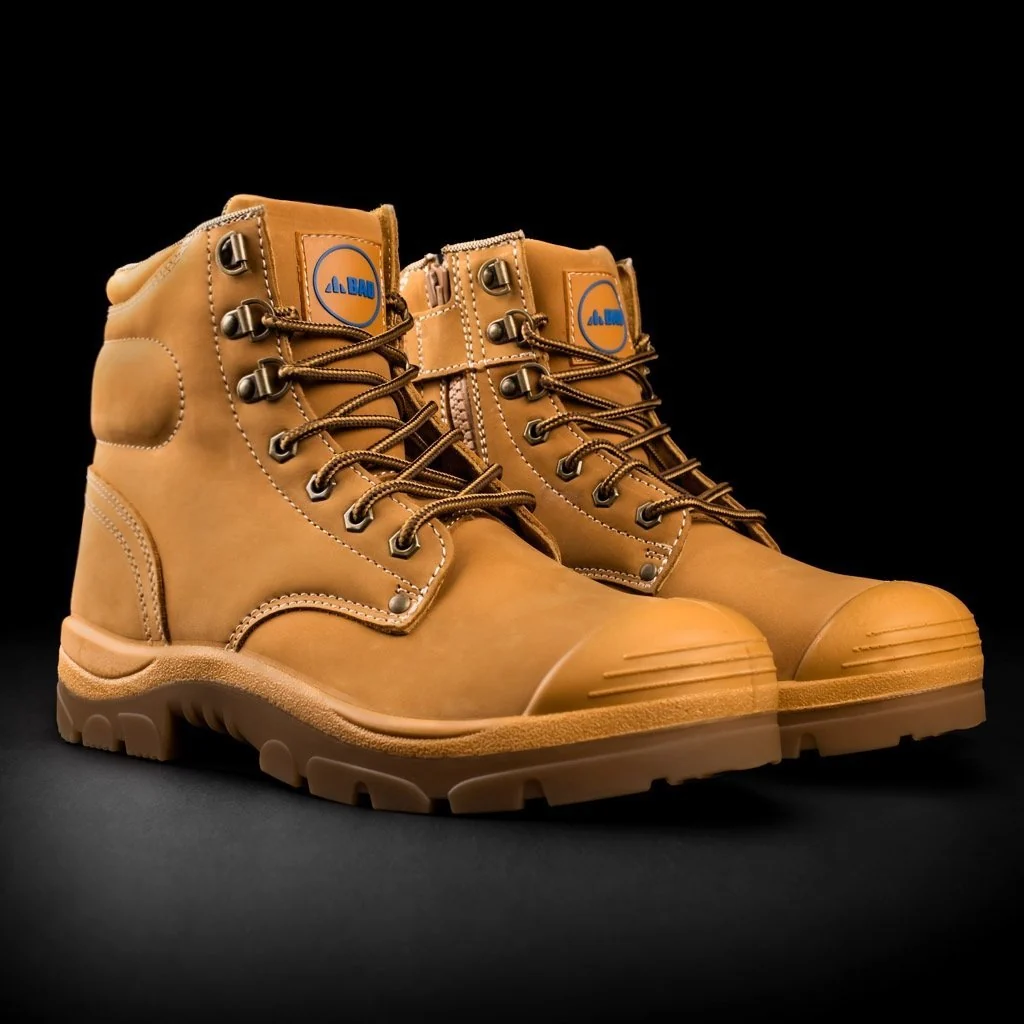
A good pair of work boots does more than protect your feet. The right pair can make long shifts easier, provide better grip on difficult surfaces, and help you stay comfortable when your job involves standing, walking, lifting, climbing, or working outdoors.
The challenge is that not every work boot is designed for the same conditions. A construction worker may need toe protection and a puncture-resistant sole, while someone working in a warehouse may care more about cushioning, traction, and weight. Outdoor workers may need waterproofing, while electricians often look for specific sole and material characteristics.
Choosing correctly starts with understanding what your job actually demands. Instead of buying a boot simply because it looks tough, consider its safety features, fit, construction, sole, materials, and the environment where you will wear it.
What Are Work Boots?
Work boots are footwear designed for demanding jobs and working environments. Depending on the model, they can offer features such as reinforced toe protection, slip-resistant outsoles, waterproof materials, electrical-hazard protection, ankle support, or puncture-resistant construction.
There is no single design that works for every occupation. Work boots range from lightweight styles for indoor jobs to heavily constructed boots intended for construction sites, farms, industrial environments, and outdoor work.
The most suitable boot is therefore the one that matches your workplace rather than simply the one with the longest list of features.
Why the Right Work Boots Matter
Your feet deal with thousands of steps during a typical working day. If your footwear is poorly fitted, excessively heavy, or unsuitable for the surface beneath you, discomfort can build quickly.
A well-chosen boot can provide a stable platform for walking and standing. It can also help protect your feet from hazards that ordinary shoes are not designed to handle.
There is another practical consideration: durability. Workers who spend hours outdoors or around rough surfaces can put significant stress on footwear. Strong stitching, quality materials, a properly constructed sole, and a suitable tread can make a noticeable difference over time.
That does not mean the most expensive boot is automatically the best choice. A boot that fits poorly or has features you do not need can be a worse purchase than a simpler model that matches your work.
Key Features to Look For
1. Toe Protection
Safety-toe boots are available with different types of protective toe caps. Steel toes are traditionally associated with heavy-duty work footwear, while composite and alloy options can offer different combinations of weight, insulation, and protection.
The correct choice depends on your workplace requirements. If your employer specifies a particular safety standard or toe protection, follow those requirements rather than choosing based only on appearance.
2. Slip Resistance
Traction matters whenever you work on smooth, wet, oily, dusty, or uneven surfaces.
Look closely at the outsole pattern rather than assuming a thick sole automatically provides good grip. A tread designed for your working environment can be more useful than an aggressive-looking sole intended for a completely different surface.
For wet indoor environments, for example, traction and tread design may be more relevant than deep outdoor lugs.
3. Waterproofing
Water-resistant and waterproof are not necessarily the same thing.
If you regularly work in rain, mud, wet grass, or damp conditions, waterproof construction can be valuable. But waterproof boots can sometimes feel warmer or less breathable than lighter footwear.
Think about how often you actually encounter water. Someone occasionally walking between buildings may not need the same level of protection as a worker who spends an entire shift outdoors.
4. Comfort and Cushioning
Protection is only part of the equation. If you wear boots for eight or ten hours, comfort becomes a practical requirement.
Look for adequate cushioning, a supportive footbed, enough room for your toes, and a fit that does not create pressure points. Your heel should remain reasonably secure without feeling squeezed.
A boot that feels comfortable for five minutes in a store can feel very different after several hours. When possible, try boots on while wearing the type of work socks you normally use.
5. Ankle Support
Higher boots can provide additional ankle coverage and protection from dirt, debris, and weather. They can also feel more secure in certain outdoor environments.
However, taller boots may be heavier and less flexible. If your job involves frequent bending, climbing, or walking indoors, a lower or more flexible design may be more practical.
6. Outsole Construction
The outsole affects traction, durability, flexibility, and how the boot feels under your feet.
Rubber outsoles are common because they can provide useful traction and durability. Different compounds and tread patterns are designed for different surfaces, so consider the conditions you encounter most often.
7. Materials
Leather remains popular because it can be durable and can develop a comfortable fit with use. Synthetic materials may offer lower weight or specific water and abrasion resistance.
Material choice should reflect your working environment. A breathable lightweight boot may be preferable indoors, while a rugged construction may make more sense for harsh outdoor conditions.
How to Choose Work Boots Step by Step
Step 1: Identify Your Main Workplace Hazards
Start with the risks rather than the boot.
Ask yourself:
- Could something heavy fall on my feet?
- Are floors frequently wet or slippery?
- Will I encounter sharp objects?
- Do I work around electrical hazards?
- Am I exposed to rain, mud, snow, or extreme temperatures?
- Do I spend most of the day standing or walking?
- Do I climb ladders or work on uneven ground?
Your answers will narrow down the features you actually need.
Step 2: Check Your Employer’s Requirements
Some workplaces require specific safety footwear or certification. Before buying anything, check your employer’s rules.
This is especially important for jobs involving construction, manufacturing, electrical work, warehouses, and other environments where formal safety requirements may apply.
Step 3: Get the Fit Right
Try boots on near the end of the day when your feet may be slightly larger than they are in the morning.
Wear your normal work socks. Walk around, bend your feet, and pay attention to pressure around your toes, heel, and sides of your feet.
Your toes should have enough space to move naturally. At the same time, your heel should not slide excessively with every step.
Step 4: Consider Weight
A heavy boot can provide substantial protection, but carrying extra weight on your feet throughout a long shift can become tiring.
If your job does not require a heavily built boot, a lighter model may be worth considering. Conversely, reducing weight should not mean giving up a safety feature that your workplace requires.
Step 5: Think About Your Working Surface
Consider where you spend most of your shift.
Concrete floors, muddy ground, gravel, ladders, wet tiles, and uneven outdoor terrain all place different demands on footwear.
The best tread for one environment may be inconvenient in another. Match the outsole to the surface instead of choosing the most aggressive tread available.
Step 6: Break Them In Carefully
Some boots become more comfortable after a short break-in period, particularly certain leather designs.
That does not mean you should tolerate severe pain while waiting for them to “break in.” Persistent rubbing, numbness, pressure, or painful pinching is usually a sign that the fit is wrong.
Start by wearing new boots for shorter periods when possible before relying on them for a full shift.
Common Work Boot Mistakes
Buying Based Only on Appearance
A rugged-looking boot is not necessarily suitable for your job. Attractive styling should come after safety, fit, traction, and comfort.
Choosing the Wrong Size
Many people assume they need the same size in every brand. Boot shapes vary, however, and your usual size is only a starting point.
Pay attention to width and overall shape as well as length.
Ignoring Socks
The socks you wear can change how your boots fit. Thick winter socks can make a normally comfortable boot feel tight, while thin socks may leave too much movement.
Test boots with the socks you will actually wear at work.
Buying Too Many Features
It is easy to assume that more features automatically mean a better boot.
A waterproof, heavily insulated, safety-toe boot may be excellent for cold outdoor work but unnecessarily hot and heavy for an indoor warehouse.
Buy for your actual conditions.
Neglecting Maintenance
Even durable boots require care. Clean dirt and debris regularly, allow wet boots to dry properly, and follow the manufacturer’s recommendations for conditioning or cleaning the material.
Avoid treating every boot as if it were made from the same material. Leather and synthetic footwear can have different care requirements.
Expert Tips for Getting More From Your Boots
Rotate footwear when practical. If your job allows it, having two pairs can give each pair more time to dry and recover between shifts.
Replace worn footwear before it becomes a problem. Deeply worn tread, damaged soles, broken stitching, or compromised protective components can reduce the boot’s usefulness.
Pay attention to pressure points. Small discomfort during the first few minutes can become a major irritation after several hours.
Don’t sacrifice fit for protection. A safety feature only helps if the boot is appropriate for your workplace and comfortable enough to wear correctly throughout the shift.
Consider the season. A boot that works well in cold weather may be too warm for summer. Seasonal conditions can influence material, insulation, waterproofing, and ventilation choices.
Frequently Asked Questions
What are work boots used for?
Work boots are designed for demanding occupational environments and may provide protection against hazards such as impacts, slippery surfaces, water, sharp objects, or electrical risks, depending on their construction.
How should work boots fit?
They should provide enough room for natural toe movement without allowing excessive heel movement. Your foot should feel secure without painful pressure around the toes, sides, or ankle.
Are steel-toe work boots better?
Steel-toe boots can provide strong impact and compression protection, but they are not automatically the best option for every worker. Weight, temperature, workplace requirements, and personal comfort can make other protective toe materials more suitable.
How long do work boots last?
There is no universal lifespan. Durability depends on the boot’s construction, how often you wear it, your working conditions, maintenance, and the amount of wear on the outsole and upper.
Should work boots be waterproof?
Waterproof boots make sense when your work regularly exposes you to rain, puddles, mud, or other wet conditions. If you work mainly indoors in a dry environment, breathability and lighter construction may matter more.
Can work boots be comfortable for all-day wear?
Yes, provided the design and fit match your feet and working conditions. Cushioning, proper sizing, appropriate weight, and a supportive construction can all influence all-day comfort.
How can I make work boots last longer?
Keep them clean, dry them correctly after exposure to water, follow the manufacturer’s care instructions, and inspect the soles and upper regularly for damage.
What should I look for in work boots?
Start with the hazards at your workplace. Then consider required safety features, fit, traction, materials, waterproofing, weight, cushioning, and durability.
Final Thoughts
The best work boots are not necessarily the heaviest, most expensive, or most rugged-looking pair. They are the ones that provide the protection your job requires while fitting your feet and working environment properly.
Start by identifying workplace hazards, then check any required safety standards. From there, focus on fit, traction, comfort, materials, and durability. A little research before buying can help you avoid a common problem: spending money on a boot that looks impressive but does not actually suit the work you do.
For anyone who spends long hours on their feet, footwear is part of the working equipment—not simply something worn to complete the outfit.